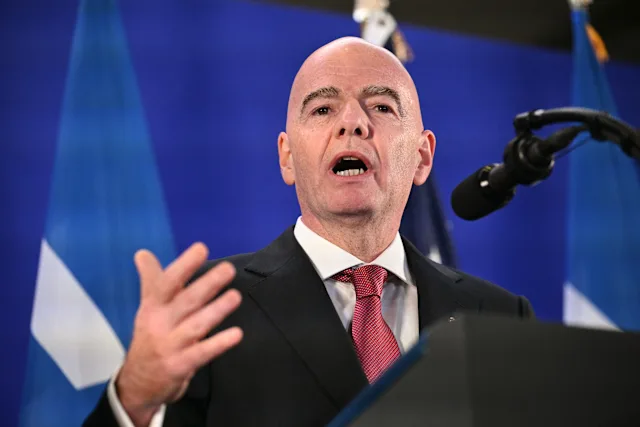
Have you ever imagined a scenario where the world biggest sporting tournament faces an absolute shutdown because European football bodies refuse to participate? International football reached a dramatic boiling point when European Union sports officials and UEFA threatened a full scale boycott of the 2030 World Cup and other global events. The unprecedented uprising was triggered by a controversial financial proposal championed by FIFA president Gianni Infantino to sell off a twenty percent stake in World Cup commercial rights to private equity firm Thrive Capital, led by Joshua Kushner.
The high stakes proposal aimed to raise four point two billion dollars in immediate capital by creating a new commercial enterprise called FIFA Forward Enterprise, offering direct twenty million dollar payouts to member associations worldwide. However, European football leaders, supported by EU sports commissioners, declared that football is not for sale. At Sports Affairs BD, we bring you an in depth analysis of how this governance crisis unfolded, why major confederations united against the plan, and what the future holds for the global game.
Understanding the Privatization Plan of the FIFA President
The controversy began when FIFA president Gianni Infantino introduced a radical corporate restructuring model for international soccer. Under this vision, FIFA would transfer the commercial management of the men 2026 World Cup, 2030 World Cup, and women tournaments into a subsidiary entity known as FIFA Forward Enterprise.
The plan promised massive financial returns, offering member associations an initial payout of twenty million dollars followed by expanded funding allocations. Supporters argued the capital injection would benefit developing football nations across Africa, Asia, and Oceania.
Key Financial Details of the Venture:
- Proposed valuation of twenty billion dollars for the commercial operations entity.
- Private equity firm Thrive Capital sought a twenty percent minority stake for four point two billion dollars.
- One off upfront payment of twenty million dollars dangled to every member nation.
- Projected annual distributions increasing significantly for small member associations.
While smaller nations found the payout attractive, major continental bodies viewed the move as a dangerous commercialization of a historic public treasure.
Why UEFA and EU Officials Threatened a 2030 World Cup Boycott
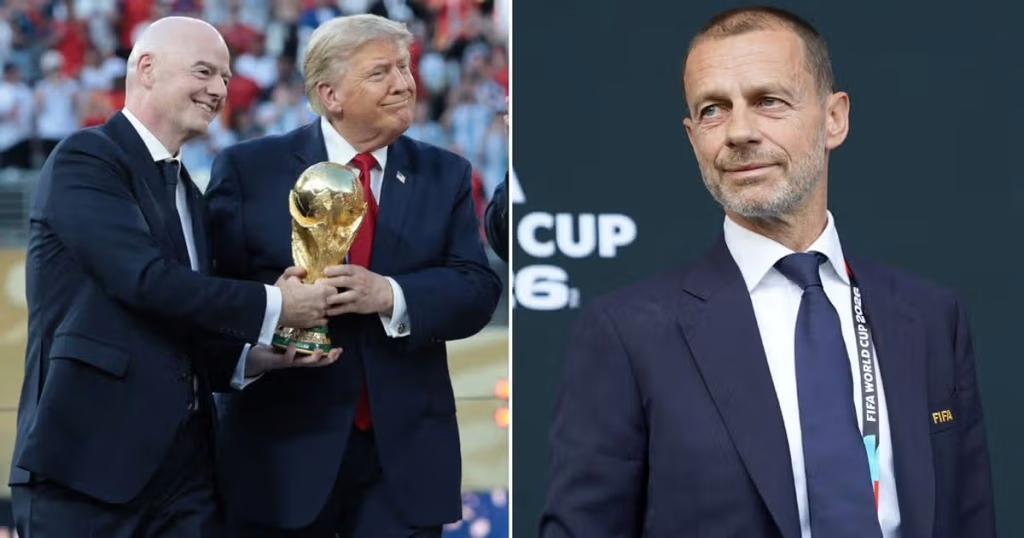
The reaction from European football authorities was swift and uncompromising. Led by UEFA president Aleksander Ceferin, all fifty five European member associations voted unanimously to reject the proposal. European Union commissioner for sports Glenn Micallef publicly backed the stand, praising European football for protecting the integrity of the game.
UEFA issued a firm declaration stating that European national teams would boycott all FIFA competitions, including the 2027 Women World Cup in Brazil and the 2030 World Cup co hosted by Spain, Portugal, and Morocco, unless the private investment plan was completely abandoned.
Major Grounds for Opposition:
- Moral Responsibility and Tradition European leaders declared that no administrator has the moral right to sell off tournaments built by generations of players and supporters.
- Lack of Transparency and Consultation The FIFA president faced fierce criticism for negotiating the multi billion dollar deal behind closed doors without consulting key stakeholder groups, leagues, or player unions.
- Pressure on the Global Calendar Bringing private investors into tournament operations creates immense commercial pressure to expand match calendars, endangering player health for shareholder profit.
- Breakdown in Governance Standards Concerns mounted over potential conflicts of interest, as senior advisors like Carlos Cordeiro resigned in protest and chief operating officer Kevin Lamour publicly criticized the secrecy of the process.
Global Opposition and Executive Backlash
It was not just Europe that raised alarms. Although UEFA took the lead with a formal boycott threat, other major confederations including Concacaf, headed by Victor Montagliani, and the Asian Football Confederation, led by Sheikh Salman bin Ibrahim Al Khalifa, issued stern statements expressing lost confidence in the decision making process.
Inside the organization, the crisis sparked high level resignations and internal rebellion. Senior figures argued that the FIFA president had exceeded his authority by attempting to force a quick decision without proper due process.
Stakeholder Response Breakdown:
| Organization or Leader | Primary Position | Key Actions Taken |
| UEFA and EU Officials | Full opposition and tournament boycott | Unanimous vote of fifty five associations to boycott 2030 World Cup |
| Concacaf and AFC | Strong governance criticism | Demanded immediate halt and full transparency review |
| Senior Internal Advisors | Internal protest and resignation | Carlos Cordeiro resigned; Kevin Lamour publicly opposed the deal |
| External Investors | Seeking commercial stake | Offered four point two billion dollars for twenty percent non controlling equity |
Faced with an overwhelming global backlash and the total collapse of institutional unity, FIFA president Gianni Infantino ultimately withdrew the private equity proposal entirely, conceding that the project created divisions inconsistent with football unity.
Political Impact on the FIFA Presidency
Despite withdrawing the proposal, the failed venture represents one of the most severe leadership crises in modern sports history. Political observers note that while former leaders like Sepp Blatter faced legal scandals, the current situation represents a fundamental clash over the soul and governance structure of international football.
With the upcoming FIFA Congress and presidential elections approaching in Rabat, Morocco, opposition groups are evaluating whether to trigger a no confidence vote. While the FIFA president remains eligible to seek re election for a final term, the revolt has shattered his previous uncontested dominance.
Key Takeaways for International Football:
- Commercial rights for the World Cup remain fully under non profit governance.
- European nations demonstrated that collective action can block unilateral corporate decisions.
- Future reforms will focus heavily on enforcing transparency, consultation, and ethical oversight.
At Sports Affairs BD, we continue to monitor these historical governance battles to bring you accurate coverage. Prominent global outlets like ESPN and BBC Sports also offer continuous reporting on these structural developments shaping the beautiful game.
Frequently Asked Questions
Why did UEFA threaten to boycott the 2030 World Cup?
UEFA threatened to boycott the 2030 World Cup because FIFA proposed selling a twenty percent commercial stake in the tournament to private equity investors, which European leaders argued would commercialize the game and destroy sports integrity.
What was the private investment proposal introduced by the FIFA president?
The proposal aimed to create a twenty billion dollar commercial subsidiary called FIFA Forward Enterprise, selling a minority stake to private investors for four point two billion dollars to offer twenty million dollar cash payouts to member associations.
Has the World Cup sell off plan been abandoned?
Yes, following total opposition from UEFA, Concacaf, the Asian Football Confederation, and EU sports officials, FIFA president Gianni Infantino officially withdrew the plan.
How can fans follow global football news on Sports Affairs BD?
Sports Affairs BD brings detailed news reports, analytical features, and expert coverage on international soccer competitions and governance developments worldwide.
Final Thoughts and Conclusion
The dramatic standoff between European football authorities and the FIFA president marks a monumental victory for fans, players, and traditional sports governance. By standing united and threatening a boycott of the 2030 World Cup, UEFA and its partners proved that the world greatest sporting event cannot be bought or sold for short term financial gain.
Want to stay informed on every major development in international sports governance and tournament updates? Visit Sports Affairs BD today for top tier sports journalism and in depth coverage. Join the Sports Affairs community now and stay ahead of every story!
Be the first to comment
Email is required but never published. Stay on topic, no spam.